
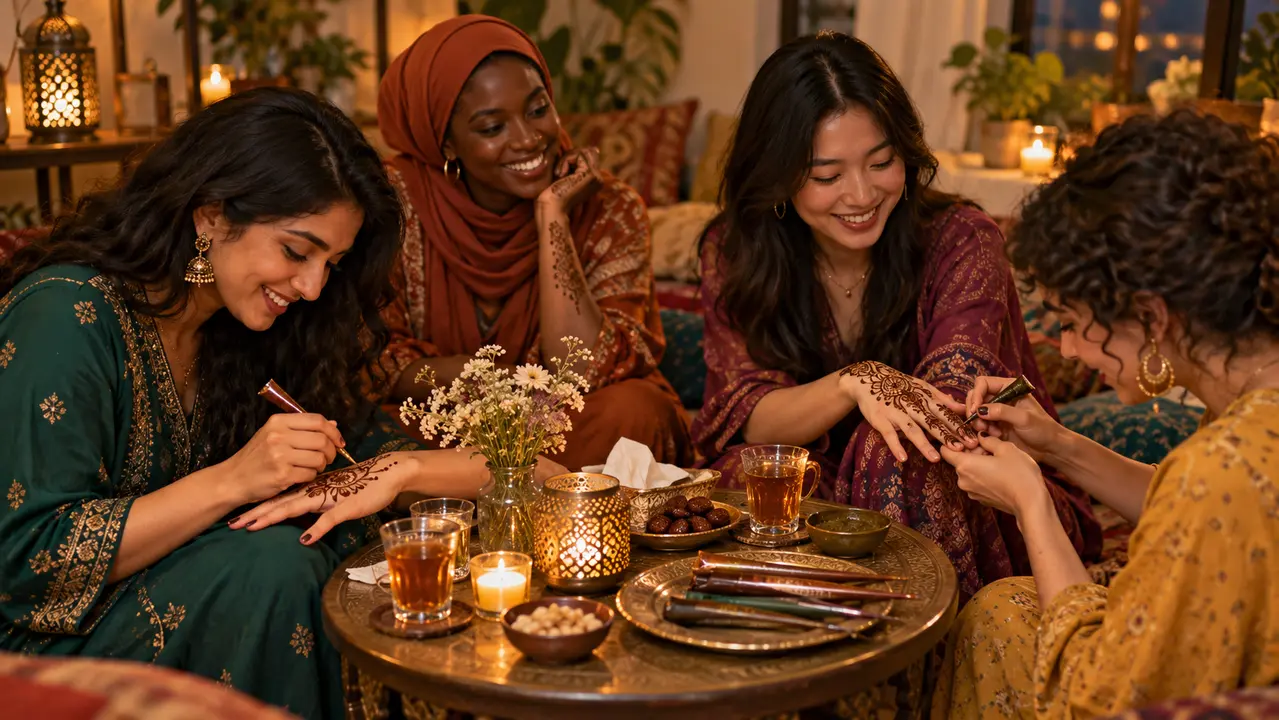
A henna evening does not have to be a grand ceremony. Among friends, it can simply be a creative experience, with a few designs and plenty of time to chat.
Deciding on the Format
First, decide what everyone would like to do: explore ideas, practise on a suitable surface or create a small design. Keeping things simple prevents the evening from turning into a hunt for supplies.
Creating a Practical Space
Provide a stable table, good lighting, something to protect the furniture and somewhere participants can rest their hands. Guests should be free to participate without feeling obliged to have a design applied.
Choosing a Suitable Preparation
Use only products with clearly identified ingredients and a stated suitability for skin application, and follow their instructions. Do not improvise recipes or mix dyes simply to save time.
Keeping the Atmosphere Pleasant
A small notebook of designs or inspirational photographs can help. You can also begin on a practice surface so that everyone can find a design they like. If you draw inspiration from a particular cultural ritual, research it rather than inventing its sequence of events.
A Simple Plan Without Inventing a Ceremony
Start with some time to select inspiration, then provide an easy-to-clean area for practising. Have examples of simple designs, a practice surface and the instructions for the products being used available. Let everyone choose whether to participate: an evening with friends does not need to imitate a family or religious ritual. If you want to explore a particular tradition, it is best to invite someone who knows it and can explain it rather than copying gestures seen in a short video without their context.
Start by Choosing the Right Type of Evening
A henna evening can be a small creative workshop with friends, a gathering to explore mehndi inspiration or part of preparations for a celebration. There is no need to present it as a traditional ceremony. If you are organising a friendly activity, simply explain what you are offering: discovering designs, practising on paper and, for those who wish, creating a temporary decoration using a preparation suitable for the skin.
Next, choose a realistic pace. A small group can take time to observe techniques and compare results. A larger group will need clearer organisation, work surfaces and turns for the activity. The key is not the most impressive decoration but ensuring that everyone can participate without being rushed.
The Space: What Makes the Activity Enjoyable
Set up a stable table, good lighting, a washable protective cover and a few practice surfaces. Provide one area for used items and another where participants can keep their hands undisturbed. A freshly applied design needs care: it may be damaged if someone immediately has to handle glasses or move chairs.
For example, imagine six friends and two areas. In the first, each person chooses some inspiration and practises on a surface that does not come into contact with skin. In the second, applications take place with movement kept to a minimum. This arrangement avoids confusing queues and gives even those who do not want to wear henna something to do.
Preparing the Choices Before Guests Arrive
Offer a few categories of designs—small floral elements, minimalist lines and delicate bracelets—rather than fifty unexplained examples. Each person can then choose an area, a level of detail and a placement. It is worth making clear from the outset that an inspirational image is not a promise of an identical result: the final appearance depends on technique, preparation and skin.
To prevent the gathering from turning into a sales session, do not make participation dependent on a particular purchase. If you recommend equipment, explain its purpose and suggest simple alternatives for practising. Any links to a shop should remain optional and transparent.
Safety and Comfort Without Alarmism
For any skin application, check the ingredient list and instructions of a product intended for that use. A preparation of unknown origin or with no ingredient information is not a suitable choice for a workshop. Do not present “black henna” as a harmless shortcut to an intense colour: some black temporary tattoo products contain sensitising dyes, notably PPD.
Simply ask whether anyone would prefer not to use a product on their skin. They can still practise on a surface or help choose designs. Stop using the product if an unusual reaction occurs; seek medical advice if symptoms are significant. A successful workshop lets everyone participate at their own pace.
A Flexible Programme to Adapt
Begin with a brief introduction to the styles and a few visual examples. Next, allow time to choose designs. Follow this with a practice session, then applications if they are wanted and appropriate. Finish with some quiet time and photographs of the designs if participants agree. This programme is a suggestion for a creative workshop, not a reconstruction of any country's custom.
To avoid disappointment, also explain that a design may not appear dark immediately. The result develops after application and varies with the preparation and area of skin. The site's earlier guide on how long a henna tattoo lasts and its application guides can answer technical questions without unnecessarily burdening this page.
Frequently Asked Questions
Do you need to hire an artist?
No, unless you want a professional finish or complex designs.
Does everyone have to wear a design?
No. Each person is free to choose whether to participate.
What is the best first design?
A small, airy design suited to the time available.
Sources and References
- UNESCO, 2024 inscription decision: https://ich.unesco.org/en/decisions/19.COM/7.B.15 (scope: social practices and their diversity across the 16 participating States, not local details)
- UNESCO, nomination file and community testimonies: https://ich.unesco.org/en/RL/henna-rituals-aesthetic-and-social-practices-02116 (consult country-specific documents before making any local claims)
- UNESCO — Henna: rituals, aesthetic and social practices (2024): https://ich.unesco.org/fr/RL/le-henne-rituels-esthetique-et-pratiques-sociales-02116