This page aims precisely to help you lay simple and solid foundations.
You will discover what natural henna is, the great traditions that surround it, the colors that we can obtain, the different forms in which we find it and the first useful points of reference to get started.
The idea is not to explain everything in a single page, but to give you a clear and pleasant overview, then to guide you to the more specific articles if you wish to go further.
What is henna?
Henna is a plant that has been used for a very long time to color skin and hair.
It comes from a shrub called Lawsonia inermis. Its leaves are harvested, dried, then reduced to powder. Once mixed with a liquid, this powder produces a coloring paste.
It is this paste which is used to make the famous temporary henna designs.
Unlike a classic tattoo, henna is not applied with a needle. It only colors the outer layer of the skin. The pattern remains visible for several days, then gradually fades with the natural renewal of the skin.
This is what makes it so charming: you can wear a refined design without a permanent commitment.
Henna and mehndi: what's the difference?
These two words are often used together, but they do not mean exactly the same thing.
The word henna designates the plant and the coloring preparation.
The word mehndi rather designates the art of decorating the skin with this preparation, particularly in South Asian traditions.
In practice, when we talk about mehndi patterns today, we often think of fine, elegant and elaborate floral designs, made with henna on the hands, fingers or feet.
Where does henna come from?
Henna has an ancient history and a very rich cultural presence.
It is found in several regions of the world, notably in North Africa, the Middle East and South Asia. It has long accompanied important moments such as weddings, family celebrations, certain religious celebrations or simply beauty rituals.
Depending on the country and traditions, the styles can be very different.
In the Maghreb, patterns can be geometric, floral or symbolic.
In India and Pakistan, mehndi is often associated with more detailed designs, with lots of curves, petals, leaves and small details.
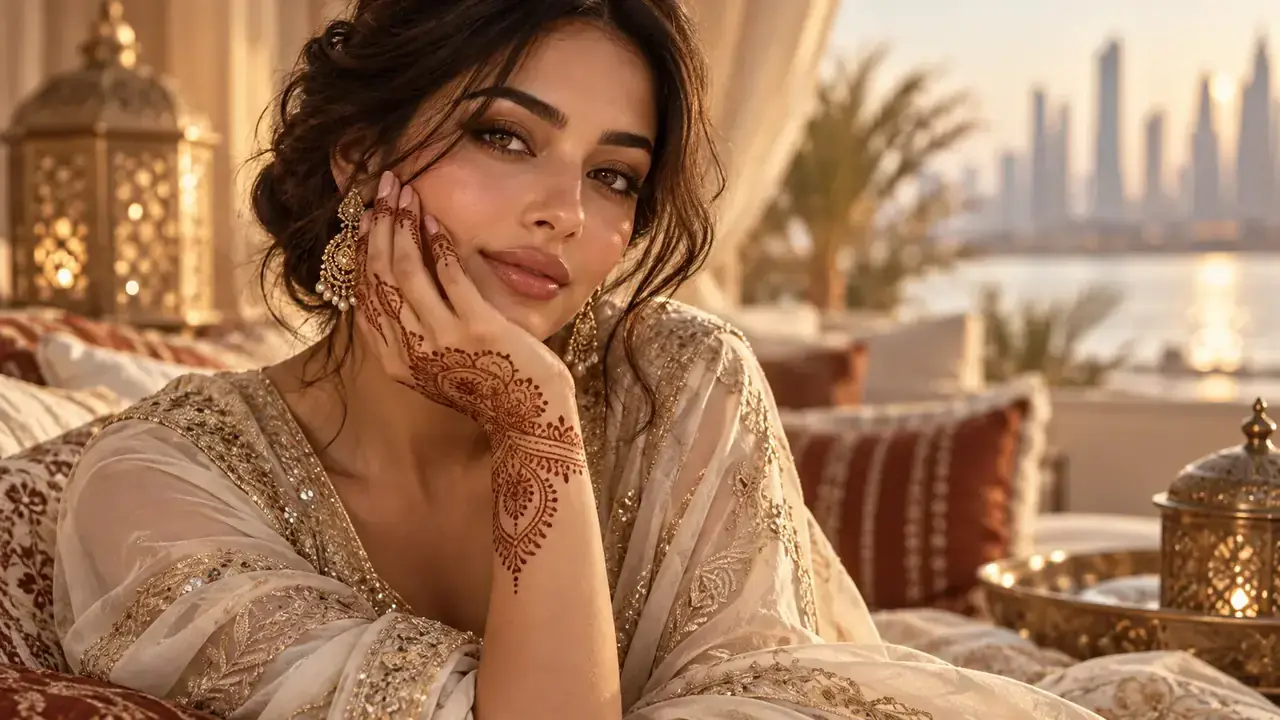
In the Gulf countries, we also find an elegant aesthetic, often more refined, which highlights the hands with refined floral arrangements.
Today, these influences mix. The same person can like a style inspired by Morocco, an Indian mehndi touch and a more modern and minimalist presentation.
This is also what makes henna so current: it can remain traditional while adapting to a very contemporary beauty world.
What colors does natural henna give?
Many beginners imagine that henna always gives a single color. In reality, the result may vary.
Natural henna used on the skin generally produces shades ranging from orange to reddish brown. The exact color depends on several elements: the quality of the preparation, the exposure time, the area of the body and the characteristics of the skin.
Right after removing the paste, the design may appear quite light, often orange. In the hours that follow, the color may darken and become more pronounced.
A useful reference point
The color does not necessarily reveal its final appearance right away.
A pattern that appears inconspicuous at first may become more visible over the next 24 to 48 hours. This is completely normal.
Why do hands often color better?
Certain areas of the body take on color better than others.
The palms of the hands and soles of the feet often produce more intense results. Conversely, the backs of the hands, wrists or forearms often offer a softer coloring.
This explains why two designs made with the same preparation can look different depending on where they are applied.
We must therefore see henna as a living art: the final color always depends on a set of factors, and this is also what makes it unique.
In what forms is henna found?
When you start, you quickly discover that there is not just one size of henna.
Depending on your level, your desire and your way of practicing, you may encounter several presentations.
Henna powder
It is the rawest and most traditional form.
It is used to prepare homemade or artisanal dough. This solution often appeals to people who like to understand what they are using and who want to have more control over their preparation.
The paste already prepared
The paste can be ready to use. This avoids the mixing step and allows you to move on to application more quickly.
The henna cone
The cone is very popular for designs on the skin. It makes it easier to apply the paste and create fine patterns, depending on its quality and the regularity of the preparation it contains.
What to remember
You don't need to test everything right away.
The main thing, at the beginning, is to understand that there are several formats and that each has a different use.
If you want to go further on this subject, a dedicated guide will explain more precisely how to choose a henna cone and what really changes from one preparation to another.
What can you create with henna?
Henna allows you to create a wide variety of styles.
This is one of the reasons why it is so popular: it can be discreet, sophisticated, traditional or very modern depending on the pattern chosen.
For example, we can create:
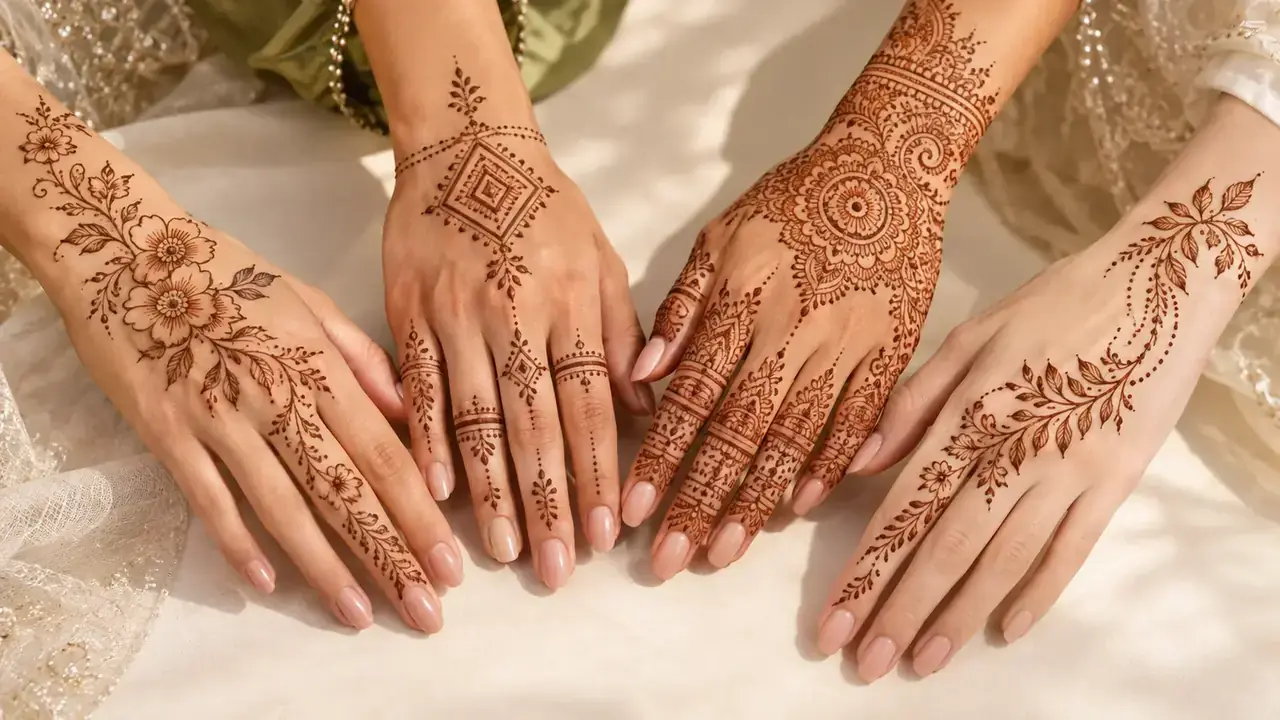
- small flowers on the fingers;
- a light pattern on the back of the hand;
- a bracelet designed around the wrist;
- a richer composition for a special occasion;
- more detailed mehndi inspiration for a party or wedding.
Some people like thin, airy patterns. Others prefer fuller, more visual and more decorative designs.
There is no one right way to wear henna.
The most important thing is to choose a style that you like and that matches the occasion, your level and the desired effect.
This is also why the world of henna remains very inspiring: each pattern can become a personal way of expressing your style.
How to start discovering henna?
When you're starting out, you might want to try everything at once: patterns, cones, Pinterest inspirations, wedding looks...
In reality, the easiest way is to start methodically.
First, take the time to look at different styles to understand what appeals to you the most. Some people like very fine designs. Others prefer simpler, more visible or more modern designs.
Next, keep in mind that a beautiful result does not only depend on the drawing itself. The choice of preparation, the area of the body and the quality of application also play an important role.
Finally, avoid trying to learn everything on a single page.
Henna is a rich universe. It is more pleasant to discover it step by step: understanding what henna is, learning to use a cone, choosing a style, knowing the differences between several types of preparations and seeing how a pattern evolves over the days.
A helpful mindset for getting started
Henna should not be seen as something complicated or reserved for experts.
It is above all an accessible, decorative and living art. Even a simple pattern can be very elegant if chosen well.
If you are starting out, the best reflex is to start by observing, understanding, then gradually testing.
FAQ — Frequently Asked Questions About Henna
Is henna a real tattoo?
No. Henna does not penetrate the skin like a permanent tattoo. It only colors its outer layer, which explains why the pattern gradually fades.
How long does a henna design last?
The duration varies depending on the area of the body, the preparation used and the way the skin renews itself. In general, a henna design can remain visible for several days, sometimes up to one to two weeks.
Is natural henna always brown?
No. Right after the paste is removed, the color is often orange. It can then evolve into an orange-brown or reddish brown.
What is the difference between natural henna and black henna?
Natural henna does not normally give an intense black to the skin. Some products called “black henna” contain other dyes. A dedicated article will help to better understand this difference.
Can you use henna for a wedding?
Yes, of course. Henna is very present in many wedding traditions. It can also be worn outside of these occasions, for pleasure or as a beauty detail.
Do you already have to know how to draw to love henna?
Not at all. We can appreciate henna for its culture, its inspirations and its patterns, even without being an expert. Over time, it is possible to learn gradually.