
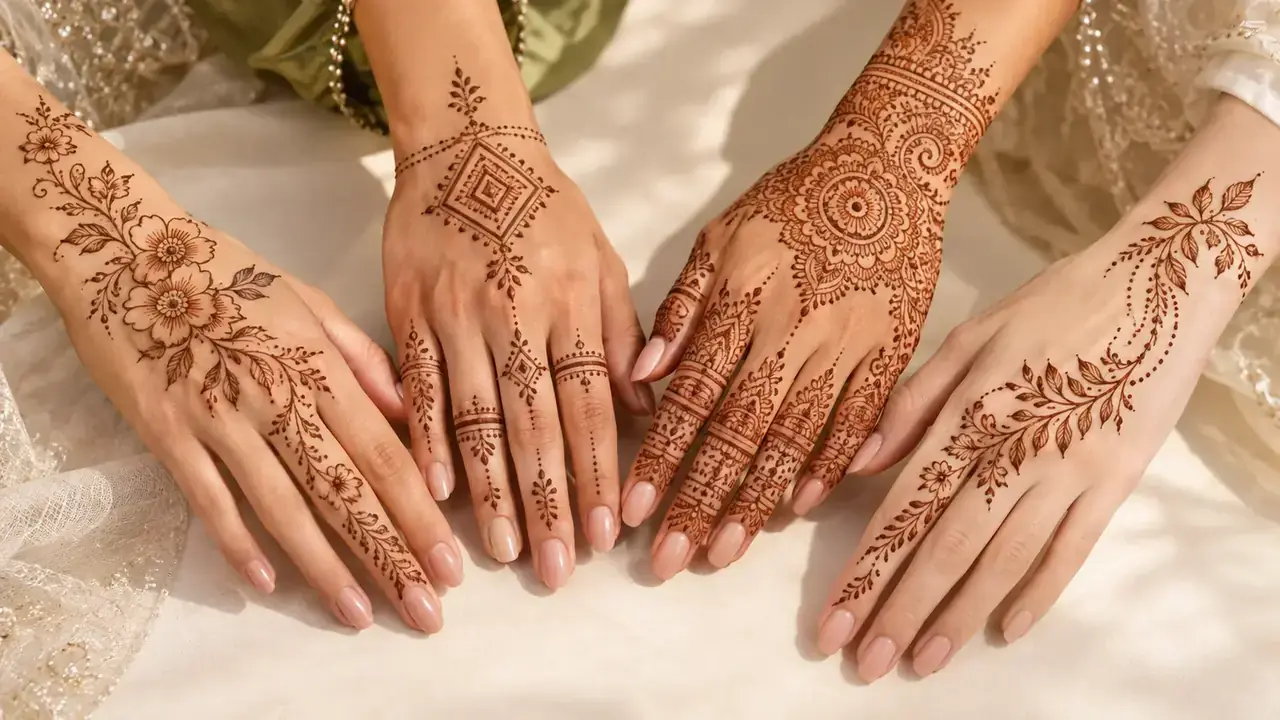
Once a design has finished developing under the paste, it is natural to want to see the result. However, removing the paste does not mean scrubbing without care. The correct approach also depends on the formulation you have chosen.
First, Follow the Instructions
Application time can vary according to the product and its ingredients. Do not try to apply a duration picked up at random on social media to every preparation. Traditional paste that dries on the skin and a different cosmetic product may come with different instructions. Read them before starting, not when it is time to remove the paste.
Observe the Condition of the Paste
Some natural henna pastes dry and come away in small pieces. You can then remove them gently according to the preparation's instructions. If the product requires rinsing or another method, follow those directions. The aim is to avoid pulling harshly at the skin or spreading residue over areas that have already been decorated.
Don't Judge the Colour Immediately
The design visible just after removing the paste may be orange and fairly faint. That does not necessarily mean the application has failed. With natural henna, the colour may continue changing over the following hours. It is therefore better to wait before comparing your result with a photograph of a dark-brown design taken two days after application.
When to Stop and Clean the Skin
If you experience burning, significant discomfort or an unusual reaction, do not continue the application: remove the product using the appropriate recommended method and seek medical advice if necessary. These situations are not the main subject of this page, but it is useful to know what to do. Our guide to how long henna tattoos last then explains how a design normally changes.
After Removal: What You May Notice
Once the dried paste has been removed according to the product instructions, the pattern may appear lighter than expected. That alone does not mean the application has failed: the shade of natural henna may continue to change. Do not confuse the paste sitting on the surface with the colour left in the skin. If you want to compare two attempts, photograph them in similar lighting and note the time elapsed since removal. However, if your skin shows an unusual reaction, stop using the product and seek appropriate medical advice.
Before Removing the Paste: Distinguish Two Things
Removing dried paste and removing the colour are two very different processes. Paste deposited on the skin forms a visible raised pattern; the stain, by contrast, appears in the skin's outermost layer. Once the preparation has been left on for the time specified in its instructions, the aim is to remove the residue without trying to “wash off the tattoo” as though it were paint. This distinction explains why a design may look very light after the paste comes off and continue to develop afterwards.
Never use a universal application time taken from social media. It depends on the product and its instructions; handmade paste and commercial formulations are not necessarily comparable. If a product causes irritation or discomfort, do not wait until a theoretical time limit has elapsed: remove it and seek appropriate healthcare advice if a reaction develops.
Removing Paste Without Scrubbing
When a product is designed to dry and then be removed, one gentle method is to loosen the fragments without aggressively scratching the skin. You can use clean fingers or an implement specified in the instructions. The point is not to rub until every orange trace disappears: that trace is the colour you wanted to achieve.
Some popular recommendations insist that any contact with water must be avoided completely. In practice, this tip should not be turned into a universal scientific truth: the priority is to follow the instructions for the exact preparation and avoid unnecessary rubbing. If the manufacturer specifies a particular cleaning method, it takes precedence over generic advice.
What You May See After Removal
| Observation | Reasonable interpretation | What not to conclude |
|---|---|---|
| Light orange pattern | Possibly normal initial staining | That the product “doesn't work” |
| Residue stuck in certain areas | Paste has not been fully removed | That you need to scrub the skin raw |
| Lines appear less defined than before | The raised paste is no longer visible | That the colour will remain identical everywhere |
| Redness, itching or an unusual sensation | Possible reaction | That this is a necessary stage of using henna |
Natural staining can develop over the following hours, but it does not necessarily change in the same way on the palm, fingers and forearm.
Actions That Mainly Make the Experience Uncomfortable
Scraping paste away with your nails, using an abrasive brush or repeatedly applying harsh products can irritate the skin. The design gains nothing from this treatment. If the skin is already fragile or damaged, it is better not to apply a decorative preparation there. A good henna experience should never depend on a “challenge” in which you endure an unpleasant sensation to obtain a particular colour.
Imagine a delicate floral pattern on the back of your hand. After application, the paste petals form a lovely, dark, raised design. Once the residue is removed, the petals look lighter: it is normal for the design to appear visually different. Avoid immediately applying another layer just to recreate the raised effect. First observe the actual stain.
How to Photograph the Result Properly
Take one photograph just after removal, then another in comparable lighting the next day. This is a simple way to observe how a preparation develops and understand why photographs posted online at different stages cannot be compared directly. Avoid filters that artificially intensify red or brown: they give a misleading impression of the result.
The lifespan of the design, factors that shorten it and comparisons between body areas are covered in our earlier guide to how long a henna tattoo lasts. Here, the focus remains on the precise moment of removal and the observations that follow.
Frequently Asked Questions
Do I always have to rinse the paste off with plenty of water?
No. The removal method depends on the product's instructions.
Does an orange design mean the henna hasn't worked?
No. The result may darken over the following hours.
Can I remove the paste by scrubbing hard?
It is better to avoid rubbing the skin harshly.
Sources and References
- FDA — Temporary Tattoos, Henna/Mehndi, and Black Henna: https://www.fda.gov/cosmetics/cosmetic-products/temporary-tattoos-hennamehndi-and-black-henna-fact-sheet
- NHS — Hair dye reactions (PPD and black henna): https://www.nhs.uk/conditions/hair-dye-reactions/