
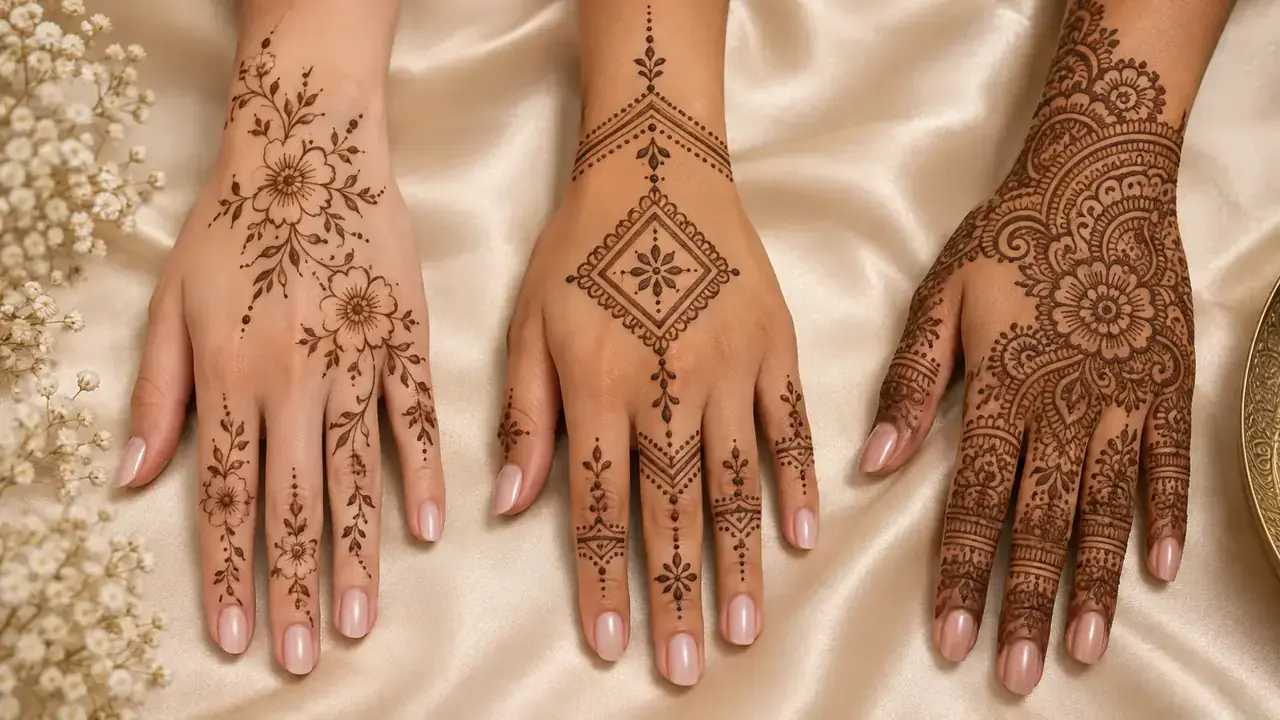
Do you like clearly visible reddish-brown designs? Before looking for a miracle trick, it is important to know that natural henna does not produce exactly the same colour on every person's skin or on every part of the body.
The Area You Choose Makes a Big Difference
Palms and the soles of the feet often produce deeper colours than forearms or the backs of the hands. This is partly related to the skin's outer layer. It is therefore normal for a subtle wrist design to look different from a large composition on the palm. When comparing two attempts, consider their location first.
Preparation and Application Matter
A suitable paste that has been stored correctly and used according to its instructions is more likely to produce the expected result. Application time must be sufficient, but that does not mean extending it indefinitely or ignoring the product's directions. Randomly adding black dye or harsh ingredients is not a solution: natural henna has its own range of shades.
Give the Colour Time to Develop
The pattern may look orange just after the paste is removed, then become browner over the following 24 to 48 hours. This explains why photographs taken immediately after application are not always representative. Waiting before judging the colour avoids unnecessary repeated attempts.
When to Consult the Troubleshooting Guide
If the colour barely develops despite appropriate use, several causes are possible: the condition of the preparation, storage, application time or application conditions. Our earlier guide, “Why Isn't My Henna Staining?”, examines these mistakes one by one. The essential point here is to stay within the normal shades of natural henna, without promising instant black.
A More Intense Colour Is Not Always a Better Result
Seeking a richer shade does not mean trying to achieve black. On skin, pure henna produces shades ranging from orange to reddish-brown, with normal variations between people and body areas. A photograph of a very dark palm design is no guarantee of an identical result on a forearm. Do not try to compensate for a disappointing shade with unknown ingredients or irritating recipes. For unusually weak staining, consult the specific guide, “Why Isn't My Henna Staining?” instead.
What “Darker” Really Means
Achieving a darker colour does not mean turning natural henna black. The plant generally produces stains ranging from orange to reddish-brown on skin. Their intensity varies with the preparation, the area and application conditions. A promise of immediate, intense black should therefore not be viewed as proof that natural henna performs better.
First, define your aim: do you want a more visible pattern on the palm, an even stain on the fingers or a deeper shade on the forearm? These results cannot be compared in the same way. A palm design may appear more intense than one made on an area with a thinner outer skin layer on the very same day, even with identical paste.
Factors You Can Reasonably Influence
| Factor | What you can do | Important limitation |
|---|---|---|
| Product origin and composition | Choose a clearly identified preparation intended for skin | No marketing label guarantees a particular shade |
| Following the method | Follow the preparation and application instructions | Longer is not always better |
| Body area | Take account of differences between palm and forearm | You cannot make every area behave identically |
| Comparing results | Photograph them in similar lighting and after similar intervals | A filtered photograph proves nothing |
These are modest but real ways to improve your approach: they prevent you from confusing the quality of the paste with variables you cannot fully control.
Why an Initially Orange Colour Is Not a Failure
When the paste is removed, the result may seem too light to a beginner accustomed to photographs of patterns that have already darkened. Yet the stain may continue developing over the next 24 to 48 hours. Looking only at the colour immediately after removal is like judging a photograph before it has developed: you may not yet be seeing the final result.
This development does not justify promising dark brown on every skin type. Skin texture, body area, product and actual conditions remain decisive. The fairest comparison is to look at the same design at two different times, in the same lighting, rather than comparing it with other people's edited photographs.
Why Some Popular Tips Are Misleading
Online, you can find advice recommending large amounts of lemon juice, highly concentrated oils, strongly heating the skin or extending application time indefinitely. These are not universal methods and can cause skin tolerance problems. Do not present them as safe shortcuts to deeper colour.
Similarly, choosing a black preparation simply because it looks “more effective” raises another issue: its colour may come from added dyes. European health authorities specifically warn against PPD used in some temporary tattoos described as black henna. The distinction between natural and black henna is explored in an earlier dedicated guide.
A Simple Comparison Exercise
If you have a clearly identified preparation whose instructions permit your intended use, keep the same conditions when comparing two designs: the same body area, the same day and photographs taken at the same interval after application. Change only one variable at a time, such as the design's size, if you want to understand its visual impact. Otherwise, you may attribute a result to a trick when the difference actually comes from the body area.
This does not mean experimenting with improvised ingredients on skin. The appropriate comparison is documentary and visual: a known product, application consistent with its instructions and reasonable observations.
When to Seek Advice Rather Than Intensify the Colour
If the skin becomes itchy, feels hot or develops unusual redness, do not add another layer in the hope of achieving more colour. Skin tolerance comes first. Natural staining never justifies a painful reaction. If a reaction persists, seek appropriate healthcare advice.
You can therefore work towards a more consistent result and understand how the shade develops, but without promises of “guaranteed black”, harsh products or miracle recipes. This approach creates realistic expectations.
Frequently Asked Questions
Can pure henna produce deep black?
No. It usually produces orange to reddish-brown shades.
Does the palm often stain more deeply than the arm?
Yes, that is a common tendency.
Should I judge the result as soon as the paste comes off?
No. The colour may continue developing for another day or two.
Sources and References
- FDA — Temporary Tattoos, Henna/Mehndi, and Black Henna: https://www.fda.gov/cosmetics/cosmetic-products/temporary-tattoos-hennamehndi-and-black-henna-fact-sheet